
CPVC Tee Fittings
In the intricate universe of plumbing and fluid transportation, some parts are silently performing their functions to keep the whole system going. The spotlight is on the pipes, but it’s the fittings that truly control the flow and make a project alive. Among the essential connectors, the CPVC tee is a hero, a mere but influential item that unlocks the possibility of intricate branching.
This write-up will take a look at the CPVC tee, which is a fundamental part of the contemporary piping systems. Its main uses, the considerable advantages it has over other materials, and easy installation tips to make sure of a leak-proof, long-lasting connection will be discussed. No matter if you are a plumbing expert or a passionate DIY-er working on a home project, knowing this fitting is the way to success.
What exactly is a CPVC Tee?
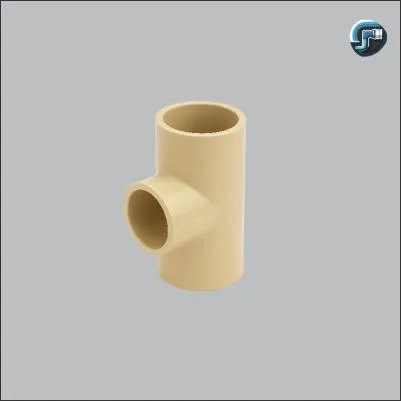
The fundamental nature of a tee cpvc fitting is that it is a T-shaped connector with three openings. The main objective of it is to either combine or divide the flow of the liquid. Picture a major water line passing through a wall. To supply water to a sink or shower from that line, you will need a fitting which will be able to connect with the main flow and direct it to the new location. Here comes the tee in.
The first two openings are aligned making it possible for the main pipe to go on with its journey without any interruptions. With the third opening, which is on the side, at a right angle to the main line, the branch is formed. These fittings are made out of Chlorinated Polyvinyl Chloride (CPVC), a thermoplastic material that is recognized for its power, longevity, and ability to resist high temperatures as well as corrosion and chemicals.
CPVC fittings, unlike their standard PVC counterparts, are capable of handling hot water; hence, they are accepted as the best choice for both hot and cold water distribution systems in both residential and commercial buildings. The “chlorinated” in their name signifies a process that incorporates chlorine atoms into the PVC polymer chain thereby, improving its thermal stability and chemical resistance.
Core Applications: Where the CPVC Tee Shines
The versatility of cpvc tee fittings allows them to be used in a wide array of applications. Their unique properties make them suitable for systems where other materials might fail.
Residential Hot and Cold Water Plumbing
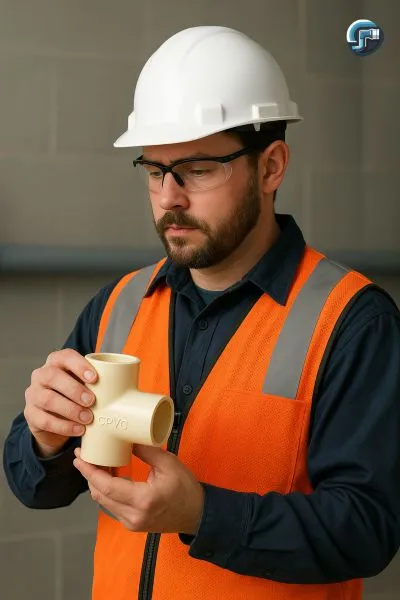
The CPVC Tee is one of the most common use cases among the fittings. The residential water system needs to be divided among many points such as sinks, showers, toilets, washing machines, and water heaters by using the main supply line of the house. To create these vital branches, a tee cpvc is put to use. For example, a cold-water line running through a bathroom floor might use several tees to serve the toilet, sink, and shower with water simultaneously. Its temperature tolerance of up to 200°F (93°C) makes it suitable for the hot water side of the system as well.
I recall a situation when an old house was renovated and still there were galvanised steel pipes. The rusting was so extensive that the water flow in the upstairs bathroom was only a trickle. By the installation of a new CPVC system, we used dozens of tee fittings to reroute the plumbing efficiently. The homeowner was amazed—it was like having a brand-new water system. It was a vivid reminder of how these modest fittings can completely transform a home’s functionality.
Commercial and Industrial Systems
CPVC’s advantages go way beyond just being in the residential area. The hot and cold water distribution that can be relied on is in great demand especially at commercial places like hotels, hospitals, and office complexes. The corrosion-resistance feature of a CPVC tee gives it a long-life span solution, hence maintenance costs and downtime are lower.
Its chemical resistance property also makes it suitable for a wide range of industrial applications. CPVC can withstand a lot of acids, bases, and salts that are present in the environment without deteriorating. That is why it is the first choice material in chemical processing plants, wastewater treatment facilities and other industrial places where corrosive fluids transport is going on. A tee cpvc fitting helps to create branch lines in these areas that are safe from risks of leaks of chemicals into the equipment or personnel areas which could lead to accidents.
The Advantages of Choosing CPVC Tee Fittings
What are the reasons for selecting a CPVC Tee instead of other materials such as copper, steel, or even regular PVC? The explanation is found within the performance, cost, and usability altogether.
What makes the CPVC tee a preferred choice over such metals as copper, steel and even regular PVC? The three aspects of performance, cost, and usability concurrently provide the answer.
High Temperature and Pressure Resistance
CPVC’s most significant advantage is its great temperature tolerance. Standard PVC’s melting point is around 140°F (60°C) but CPVC can handle even higher temperatures reaching up to 200°F (93°C) before it starts losing its form and strength. Therefore, hot water lines can use only CPVC among the two types. In addition to that, it can also handle high pressure so it can be used with the usual municipal water pressures.
Outstanding Corrosion Resistance
Copper and galvanized steel pipes are always the first ones to suffer from corrosion and scaling in the course of their life. This can restrict the water flow, create pinhole leaks, and even lead to water contamination. Conversely, CPVC is the plastic type that will not chip and is also the most corrosion-resistant. It will neither rust nor pit nor scale, thus offering a very smooth interior and a very high flow rate for the entire lifetime of the system. This is a particularly huge plus in regions with bad water conditions (high or low pH).
Ease and Speed of Installation
Dealing with CPVC pipes is a lot less time-consuming and more comfortable than dealing with metal pipes. Connecting a cpvc tee with a pipe is just a two-step process, which is applying a primer and then using solvent cement. This cold-welding technique takes only seconds to carry out and creates a permanent fused joint at the same time.
Soldering torches are not necessary, hence the fire risk on the site is eliminated. The cold plastic nature of CPVC allows handling without much effort, mainly when it comes to carrying long runs of pipes or working in confined areas. For a pro plumber this faster way means the payment for labor is lower. For a homeowner doing it himself/herself, it means a less scary and more manageable project.
Cost-Effectiveness
CPVC materials are generally less expensive than copper. When you factor in the lower labor costs due to faster installation, the overall project cost can be significantly reduced. Price stability is another factor; while copper prices can fluctuate wildly based on the global commodities market, CPVC prices tend to be much more stable.
A Practical Guide to Installing a CPVC Tee
A successful plumbing system depends on proper installation. While the process is straightforward, attention to detail is critical to creating strong, leak-proof joints.
Step 1: Gather Your Tools and Materials
Before you start, make sure you have everything you need:
- CPVC pipes
- CPVC tee fittings
- Pipe cutter or saw
- Deburring tool or utility knife
- Measuring tape and marker
- CPVC primer (often purple, but clear is available)
- CPVC solvent cement (typically orange or one-step yellow)
- A clean, dry cloth
Step 2: Cut the Pipe to Length
Properly measure and mark the pipe. It’s better to use a specific plastic pipe cutter for a neat, square cut. A hacksaw is another option, but it is a must to make sure that the cut is truly straight. A cut that is not straight will keep the pipe from being inserted all the way into the fitting’s socket and will result in a joint that is not strong enough.
Step 3: Deburr and Clean the Pipe
The first thing you will see after cutting is the small burrs of plastic on the pipe’s inside and outside edges. Get rid of these burrs by using a deburring tool or a dull utility knife blade. These burrs might not allow solvent cement to spread evenly during assembly and hence create a leak path. After deburring, clean the end of the pipe and the inside of the tee cpvc fitting with a soft cloth to get rid of any dirt, grease, or moisture.
Step 4: The Dry Fit
It is a rule to always do a dry fit first before applying any primer or cement. To do this, push the pipe into the tee fitting to check that it is not only going to fit well but also that it is going to get all the way to the bottom of the socket. This will also enable you to verify your dimensions and orientation. If you need the tee to be in a particular position, make alignment marks on both the pipe and the fitting.
Step 5: Apply Primer
Many people are tempted to skip primer as it is a crucial step. Do not manage! The primer cleans and softens the surface of the CPVC, and it is ready for the solvent cement. Use the dauber applicator to put a generous layer of primer on the pipe’s end and on the fitting socket’s inside. The surface must be wet to the eye.
Step 6: Apply Solvent Cement
Don’t waste time because the primer and cement are quick. While the primer is still wet, apply an even coat of CPVC solvent cement on the same surfaces—first on the outside of the pipe, then on the inside of the fitting socket. Putting it on the pipe first keeps the cement from being pushed out of the socket during insertion.
Step 7: Assemble the Joint
Immediately and with a slight twist (about a quarter turn), insert the pipe into the cpvc tee fitting. That spreads the cement very well. Push the pipe until its end is at the socket and hold it there for about 30 seconds. Cement is setting very quickly, and if you do not keep a hold on it, the pipe can sometimes push itself back out of the socket.
Step 8: Curing
A continuous bead of cement should be visible throughout the joint. This indicates that you have used enough cement, and thus it is a good sign. Clean the excess with a cloth. For at least 10-15 minutes the joint should not be disturbed. After curing, the joints can be subjected to water pressure. Curing times depend on pipe size, temperature, and humidity, so always refer to the instructions on the cement can.
FAQ’s
Conclusion
The CPVC Tee, being an unassuming item, is actually very important to the technical system of modern fluids. The capability of CPVC Tee to protect hot water safely, resist chemical corrosion, and make installation easier has made it a great choice for numerous projects. This small but strong fitting is engaged in a big way from providing hot water for showers in homes to chemical transport in factories safely. Professionals and DIYers can create plumbing systems that are trustworthy, long-lasting, and very strong by knowing the advantages and becoming proficient in the installation of CPVC tee.