CPVC Versus PVC
The selection of proper materials stands as the most critical step for your plumbing project. The hardware store display shows a walkway which contains pipes that come in both white and off-white colors. The two things appear identical at first sight but they are different because each item serves its own specific purpose. The selection process needs to be correct because incorrect pipe material selection will result in leaks and burst pipes which create expensive water damage throughout the entire building.
We will discuss all aspects of PVC materials. The information shows you which elements create their distinctiveness while explaining their temperature capabilities and helping you decide the best option for your needs. The detailed knowledge about these materials in sink drain replacements will help you achieve a successful installation.
Understanding PVC (Polyvinyl Chloride)
One of the most popular types of plastic polymers for synthetic use is Polyvinyl Chloride (PVC). It’s produced by manufacturers through the polymerization of vinyl chloride monomer, resulting in a lightweight, corrosion resistant, and high durability plastic.
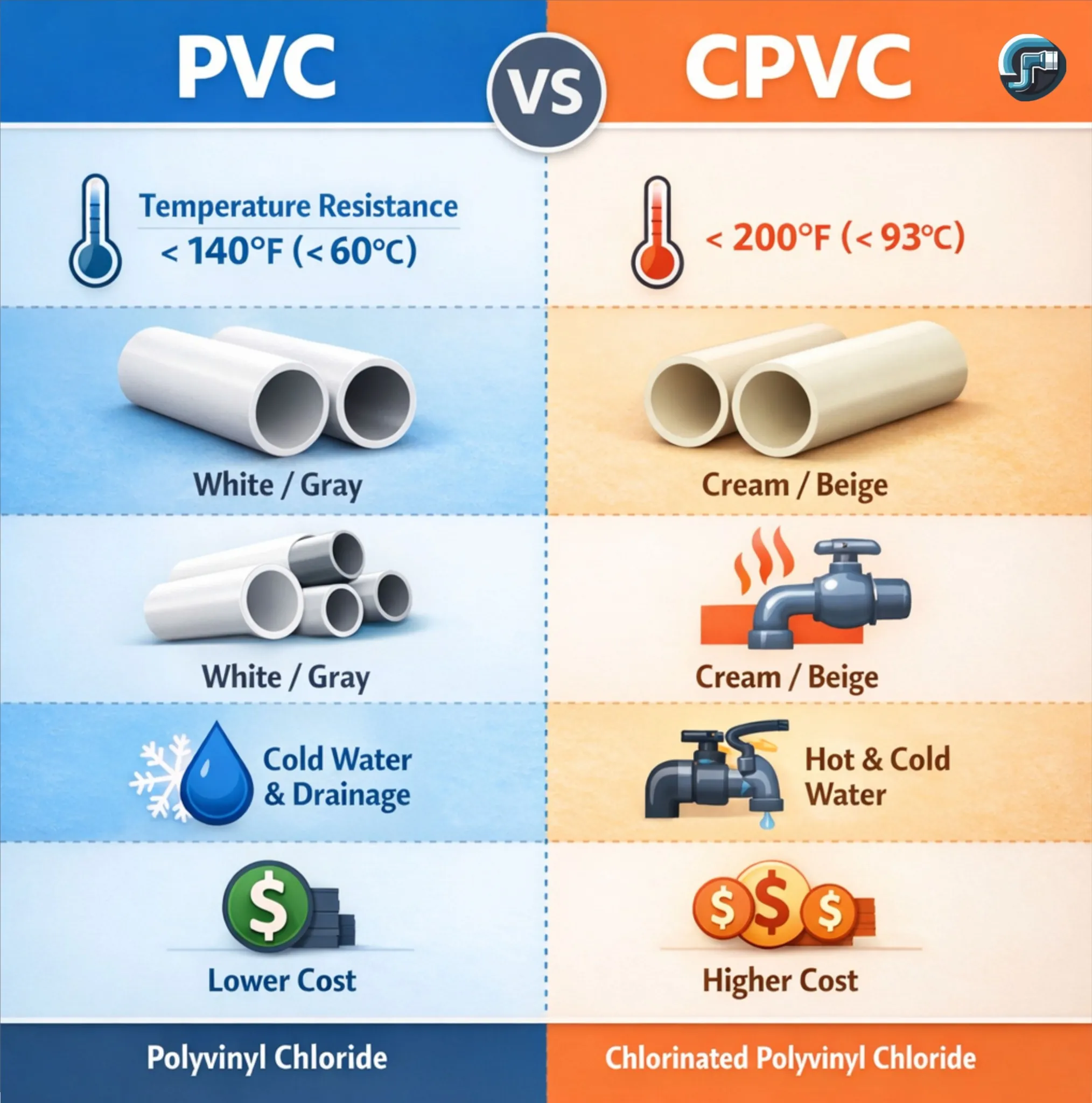
PVC is most commonly seen in a bright white color, but it has commercial variants that are a gray color. Because of the lightweight and lower cost properties of PVC when compared to metals, it has become popular with plumbers and builders as it is easy to cut and join.
Common Applications for PVC
Because of its durability and affordability, PVC dominates specific sectors of construction and plumbing. You will typically find it used for:
- Cold water distribution lines
- Drainage, waste, and vent (DWV) systems
- Irrigation systems and sprinkler lines
- Underground ducting for cables
- Pool and spa plumbing
Limitations of PVC
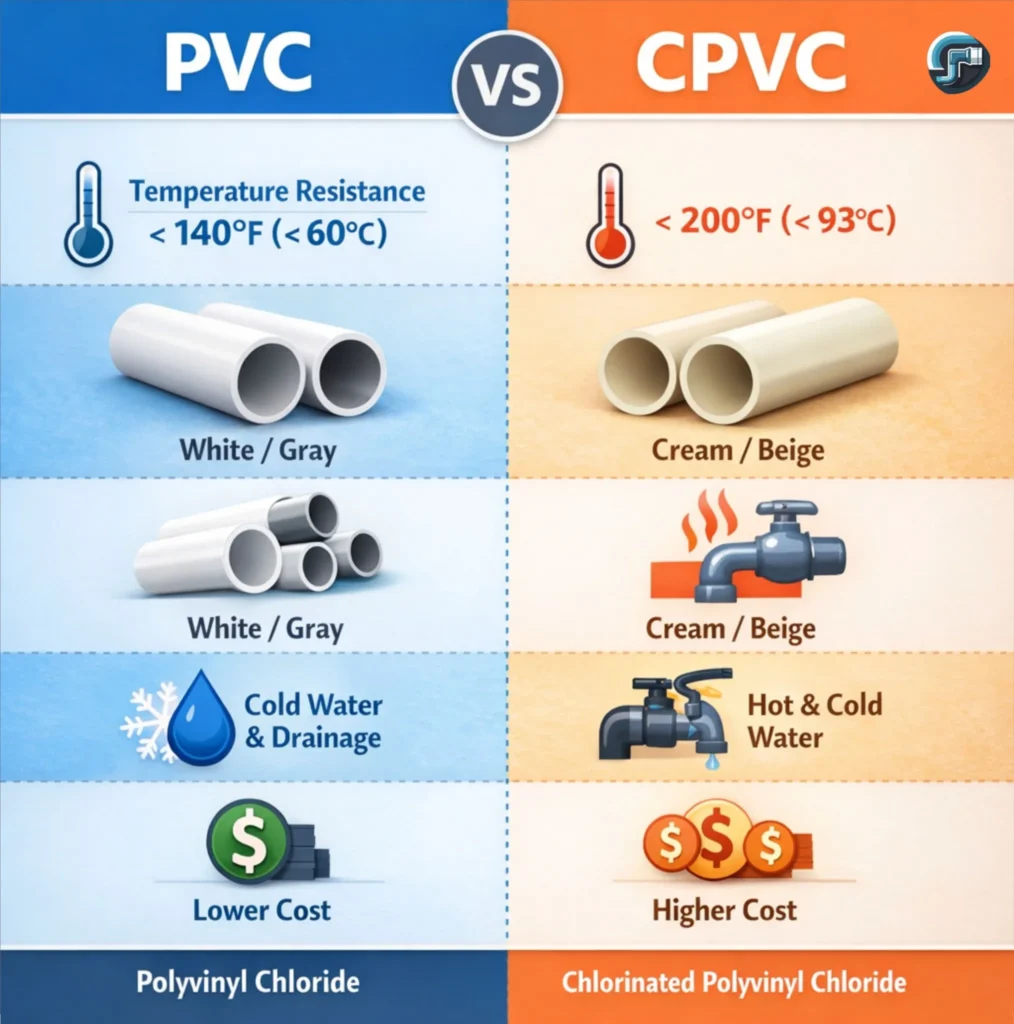
PVC is very flexible but has an Achilles heel; PVC cannot handle heat. PVC cannot handle water temperatures of 140 degrees fahrenheit (60 degrees celsius). Standard PVC will begin to soften and warp to the point of failure under pressure. Knowing this will give you some temperature limitations as to where and how you can use PVC in a structure.
Understanding CPVC (Chlorinated Polyvinyl Chloride)
Chlorinated Polyvinyl Chloride (CPVC) modifies standard PVC by changing its chemical structure, as manufacturers carry out a free radical chlorination reaction on the base PVC resin, increasing the plastic’s chlorine content.
This elementary chemical alteration alters the plastic’s physical characteristics extensively. For identification purposes in the construction industry, CPVC is typically a cream, off-white, or light gray color, differentiating it from standard white PVC. It also has different sizing standards, following Copper Tube Size (CTS) measurements, which makes it a great direct substitute for older copper pipes in houses.
The Heat Advantage of CPVC
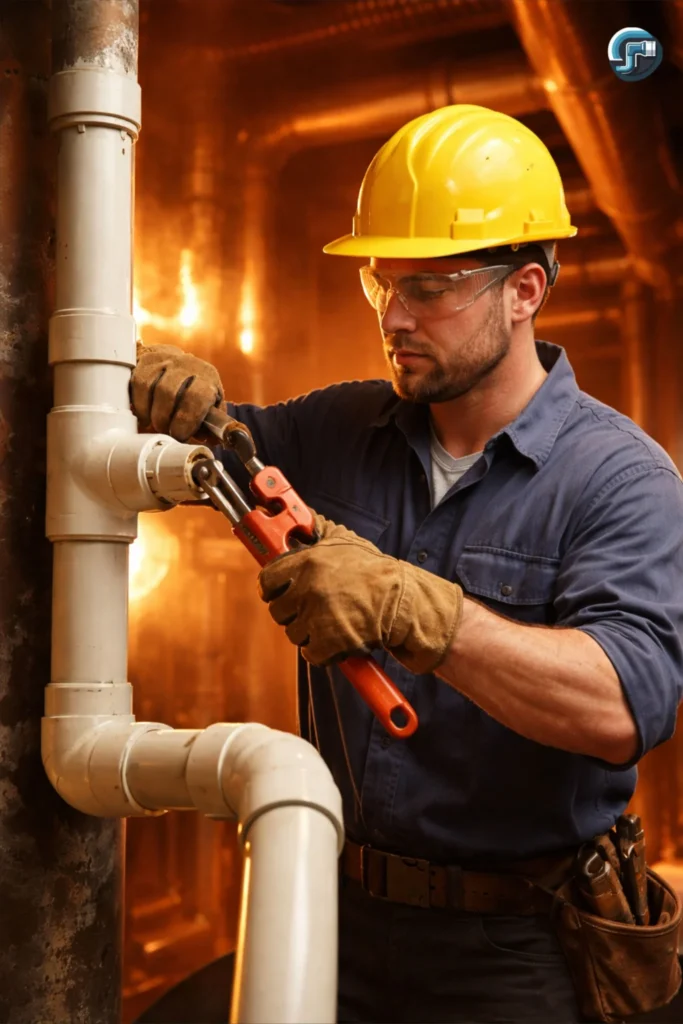
The chlorination process gives CPVC its superpower: exceptional heat resistance. While standard PVC maxes out at 140 degrees Fahrenheit, CPVC can easily handle continuous water temperatures up to 200 degrees Fahrenheit (93 degrees Celsius).
Because it withstands heat so effectively, plumbers use CPVC for:
- Residential hot and cold water delivery systems
- Industrial chemical liquid handling
- Fire suppression systems
- Commercial hot water lines
Disadvantages
CPVC (Chlorinated Polyvinyl Chloride) is widely used in plumbing due to its durability and ability to handle hot water, but it is not without drawbacks. Despite its advantages, CPVC has certain limitations that can affect its performance and suitability in different applications. From brittleness and UV sensitivity to higher costs and installation challenges, understanding these disadvantages is important before choosing CPVC for your project.
- CPVC pipes are more brittle compared to some other materials. They can crack or break under strong impact, especially in cold weather or rough handling.
- CPVC is generally more expensive than PVC, both in terms of material cost and fittings. This can increase overall project expenses, especially for large plumbing systems.
- Prolonged exposure to sunlight can weaken CPVC pipes. This makes them less suitable for outdoor use unless properly protected.
CPVC versus PVC
Temperature limitations are what separate CPVC and PVC. Different aspects separate the materials from each other. The answer lies within the chemical properties. CPVC contains more chlorine, therefore, gaining more temperature and chemical resistance. For this reason, CPVC is the preferred material over regular PVC for the transportation of corrosive materials and In chemical industries.
Cost also plays a major role. The production process needs some extra steps which increases the cost compared to regular PVC. This price difference creates higher costs than regular PVC. Hence, contractors only use CPVC where chemical resistance is necessary, relying on standard PVC for everything else.
Joining and Installation Differences
For joining and fittings of materials they go through a process called solvent welding. You only need to apply a chemical solvent to the pipe, it melts the top layer of plastic temporarily. When the two pieces are pushed together they fuse into a single seamless piece of plastic. However, you cannot use the same solvent cement for both materials. It requires specific PVC Primer and Cement.
Adding UPVC to the Mix: PVC vs CPVC vs UPVC
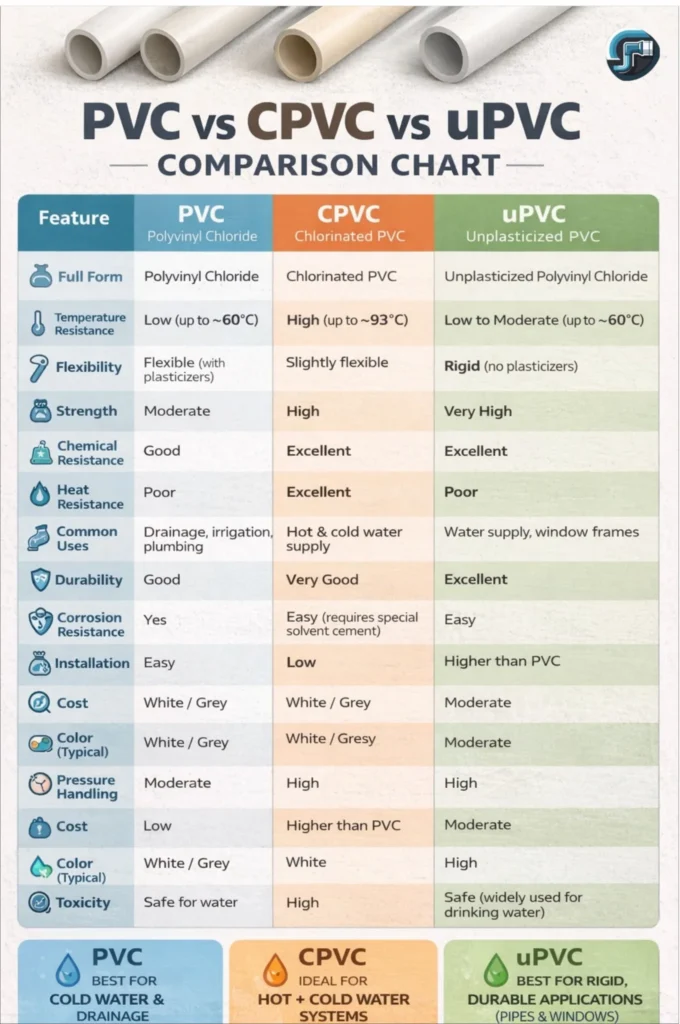
To complicate the plumbing aisle even further, you might encounter another variation: UPVC. This stands for Unplasticized Polyvinyl Chloride.
Standard PVC contains plasticizers. These chemical additives make the pipe more flexible and easier to work with. UPVC completely omits these plasticizers. As a result, UPVC becomes extremely rigid, highly durable, and highly resistant to chemical erosion and UV rays.
When analyzing pvc vs cpvc vs upvc, think of their primary functions:
PVC: Flexible enough for general plumbing, cold water, and drainage.
CPVC: Chemically altered for hot water and high-temperature industrial use.
UPVC: Unplasticized for extreme rigidity, often used for window frames, heavy-duty underground drainage, and outdoor applications exposed to sunlight.
If you specifically look at cpvc vs upvc, the contrast is stark. You use CPVC to carry pressurized hot liquids safely inside a building. You use UPVC for structural integrity, outdoor weather resistance, and heavy-duty gravity drainage where flexibility would be a liability. UPVC shares standard PVC’s weakness to heat and should never carry hot water.
How to Choose the Right Material for Your Project?
Making the right choice between pvc vs cpvc comes down to three simple questions:
Will the pipe carry hot water? If yes, you must use CPVC (or another heat-resistant material like copper or PEX). Standard PVC will fail.
Is this for drainage or venting? Standard PVC is the industry standard for DWV (drain, waste, vent) systems. Using CPVC for drainage simply wastes money.
Will it be exposed to direct sunlight? Neither standard PVC nor CPVC handle UV rays well over long periods; they become brittle. If you must run pipe outdoors above ground, you need to paint it with a water-based latex paint to protect it from UV damage, or opt for UPVC.
Best Practices for Installation
Building materials need proper installation to ensure their extended use. The correct method for cutting pipes requires you to cut them at 90-degree angles using a ratcheting pipe cutter or a fine-toothed saw. The process requires you to eliminate all burrs from both the interior and exterior surfaces of the cut edge. The presence of burrs results in two problems because they obstruct debris flow which creates blockages and they stop solvent cement from forming an ideal bond.
You must perform a dry fit of your pipes before you start applying glue. The plastic components will permanently bond within seconds after you use solvent cement to connect the two parts. The joints require complete curing time according to manufacturer specifications before you restore water pressure.
FAQ’s
Conclusion
Choosing between PVC, CPVC, and UPVC does not need to be complicated. By matching the material’s chemical and thermal properties to your project’s specific requirements, you prevent future failures and stay within budget.
Remember: keep standard PVC for your drains, cold water, and irrigation. Upgrade to CPVC whenever hot water enters the equation.
Before you cut the pipes and start your project, you should check building codes because some places have strict rules on material type which you’re using for water supply inside residential buildings. First you should create a list of pipes, fittings and solvent cement needed for your material.